Why 4 Wheel Drive Doesn’t Always Save You in Western Montana Winters
A lot of Montana drivers trust their 4WD or AWD system a little too much. And while four-wheel drive helps you move, it doesn’t guarantee you’ll stop, steer, or stay out of the ditch on ice and snow.
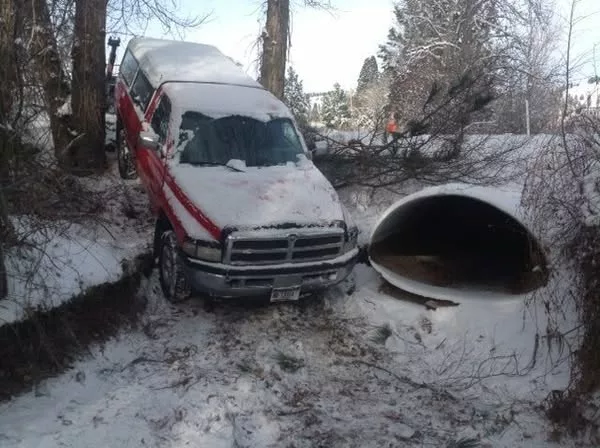
Every winter, Speed’s Towing recovers plenty of 4WD trucks and SUVs that slid off the road, high-centered in deep snow, or got stuck on rural mountain passes. Here’s why it happens — and how to avoid becoming the next recovery call.
1. 4WD Helps You Go — Not Stop
This is the biggest misunderstanding.
4WD improves traction during acceleration, but it does nothing to help you brake.
On ice or packed snow, your stopping distance can double or triple, no matter how capable your truck is.
That’s why even lifted 4WD trucks end up sliding through intersections or into ditches around Missoula.
Key point:
4WD does not make you immune to physics.
2. Ice Neutralizes All Drivetrains
Black ice and frozen surfaces around Missoula, Lolo, and Highway 93 can turn even heavy 4WD vehicles into sleds.
4WD does not give your tires more grip — it just distributes power differently.
If there’s zero traction under the tires, 4WD won’t save you.
3. Ground Clearance Doesn’t Stop High-Centering in Deep Snow
Even tall trucks get stuck if snow packs under the chassis.
This happens often on:
- Unplowed rural roads
- Driveways with deep drifts
- Forest roads near Seeley or the Bitterroot
- Snowmobile trail access points
Once the belly of the vehicle sits on the snow, your wheels lose traction completely. You’re immobilized — and spinning your tires just digs you deeper.
That’s when you need a professional winch-out, not more throttle.
4. Overconfidence Gets 4WD Drivers in Trouble
Many 4WD owners drive faster or take more risks because they “have the traction.”
- That leads to:
- Entering corners too fast
- Climbing steep roads without checking conditions
- Passing when visibility is low
- Ignoring compacted ice
- Attempting backroads during storms
Overconfidence causes far more winter accidents than lack of capability.
5. All-Season Tires Aren’t Enough for Montana Winters
4WD helps distribute power — but your tires do the actual gripping.
All-seasons harden in cold temperatures and lose traction fast.
If you drive in winter without proper snow or winter-rated tires (look for the 3-Peak Mountain Snowflake symbol), you’re relying on equipment that isn’t designed for Montana weather.
4WD + bad tires = a tow truck call waiting to happen.
6. AWD and 4WD Can Still Slide Off Rural or Mountain Roads
Rural roads in Western Montana are unpredictable:
- Steep grades
- Blind corners
- Gravel under ice
- Mixed patches of snow, mud, and slush
- Drop-offs with no guardrails
Even the best AWD systems can’t overcome poor footing or sudden traction loss.
If you slide off into deep snow or down an embankment, that’s when you need a professional recovery — not more horsepower.
7. Trying to Self-Recover Can Make It Worse
Drivers often dig themselves in deeper by:
- Spinning the tires
- Using tow straps incorrectly
- Attempting unsafe reverse angles
- Letting untrained helpers tug them out
- Overheating their transmission trying to rock the vehicle
What could have been a simple recovery becomes a more expensive one.
If you’re high-centered, stuck, or sliding, call for help before the situation gets worse.
When 4WD Isn’t Enough, Speed’s Towing Is
4WD helps — but it’s not magic. When winter weather, ice, or rural terrain take over, Speed’s Towing is ready 24/7 with:
- Accident recovery
- Light & Medium-Weight towing
- Off-road winch-outs & Heavy Duty Tows
- Roadside assistance across Western Montana
When to Choose Speed’s Towing – (406) 529-7801
Choose Speed’s every time if you want the best of both world’s. We offer 24/7 towing because we know Montanans can need the best towing services day or night, rain or chine. For a local, trusted, and experienced tow truck company.